PRP for Skin Rejuvenation: Practitioner Guide | BBAIM
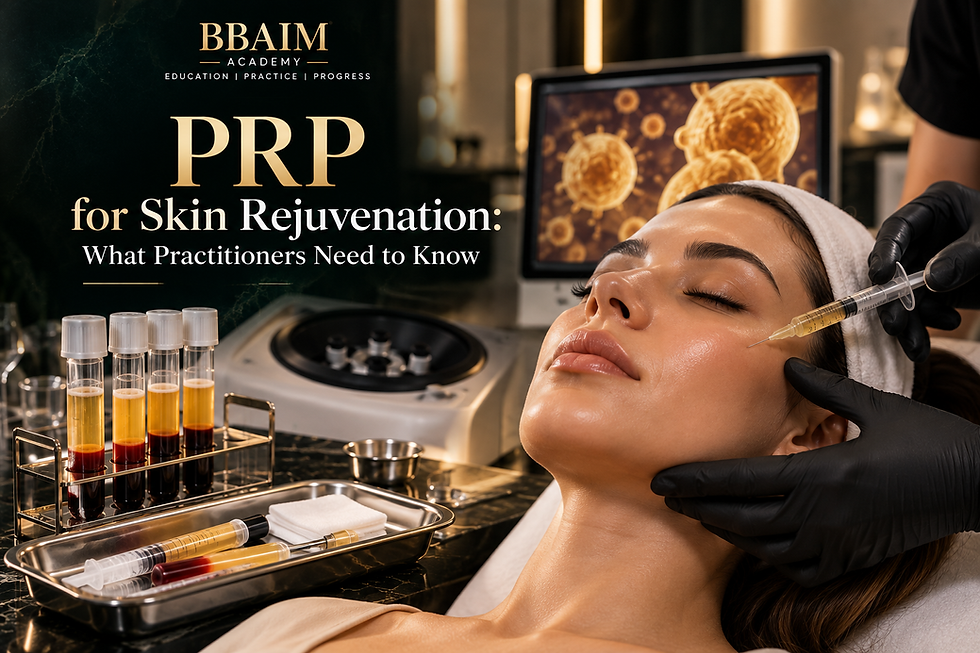
PRP for Skin Rejuvenation: What Practitioners Need to Know
Platelet-Rich Plasma (PRP) has become an established area of interest within regenerative aesthetics. Because PRP is prepared from a patient’s own blood and contains a concentrated platelet component, it is used in aesthetic practice with the aim of supporting tissue-repair processes and improving aspects of skin quality. Research suggests potential benefits, particularly for elasticity and skin thickness, although results vary and the evidence is still developing.
For practitioners considering PRP for Skin Rejuvenation, understanding the science, patient assessment, preparation principles and safe clinical practice is essential.
How Does PRP for Skin Rejuvenation Work?
PRP is an autologous platelet concentrate produced from a patient’s blood. Platelets contain growth factors involved in processes such as tissue repair, fibroblast activity and extracellular-matrix remodelling. These biological mechanisms provide the rationale for using PRP in regenerative aesthetic treatments.
In aesthetic practice, PRP has been studied for facial rejuvenation, acne scarring and periocular rejuvenation, both independently and alongside procedures such as microneedling and fractional resurfacing. However, preparation and treatment protocols are not universally standardised.
What Should Practitioners Understand?
Successful PRP practice involves more than performing the procedure. Practitioners should understand patient selection, consultation, contraindications, blood handling, PRP preparation, facial anatomy, infection prevention, treatment planning and complications management.
Setting realistic expectations is equally important. A 2025 systematic review found the strongest evidence of improvement for skin thickness and elasticity, while findings for wrinkles, texture, pigmentation and hydration were less consistent.
Practitioners should therefore avoid presenting PRP as a guaranteed rejuvenation treatment and instead use appropriate assessment, informed consent and evidence-based communication.
Learning PRP in Regenerative Aesthetic Training
For practitioners seeking PRP training in London, structured education can help connect the scientific principles of regenerative medicine with clinical decision-making and practical skills.
At BBAIM Academy in Knightsbridge, London, PRP for skin and hair forms part of our Regenerative Medicine training, supporting practitioners who want to expand their understanding of regenerative aesthetic techniques.
Frequently Asked Questions
Is PRP used for facial rejuvenation?Yes. PRP is used and studied in aesthetic practice for facial rejuvenation, although outcomes and evidence vary between different skin-quality measures.
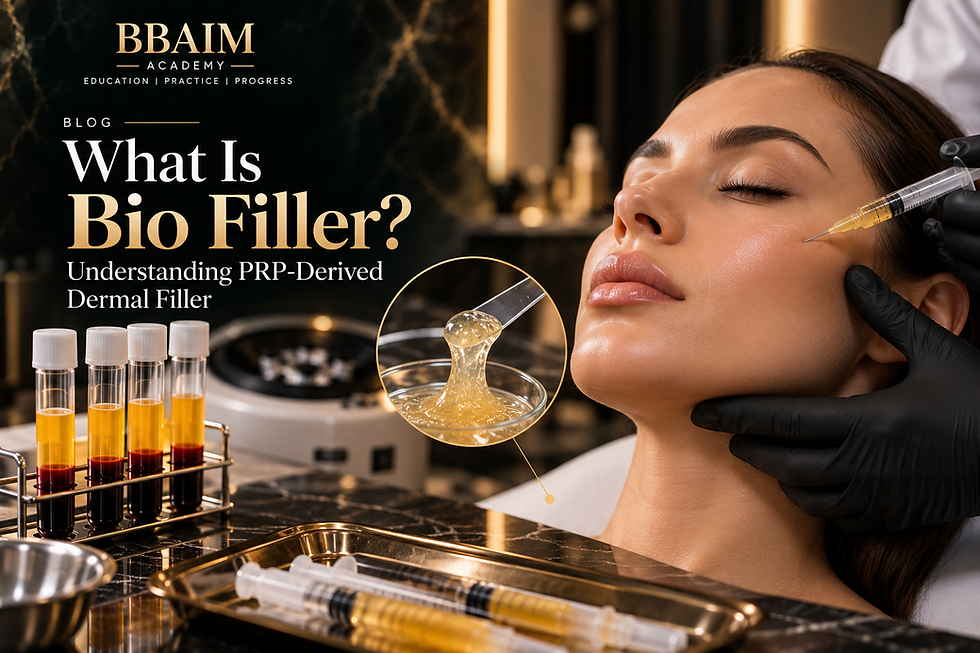
Is PRP the same as dermal filler?No. PRP is an autologous platelet concentrate derived from the patient’s own blood; it should not be confused with conventional injectable dermal fillers.
Do practitioners need PRP training?Practitioners should have appropriate education, clinical competence and insurance for the procedures they intend to provide.
Explore PRP Training in London
Interested in developing your knowledge of PRP for Skin Rejuvenation and regenerative aesthetics? Contact BBAIM Academy in Knightsbridge, London to enquire about our Regenerative Medicine training and upcoming course dates.