Facial Anatomy for Aesthetic Practitioners: Why It Matters | BBAIM Academy
Facial Anatomy for Aesthetic Practitioners: Why It Matters for Safe and Effective Treatments
Understanding facial anatomy for aesthetic practitioners is one of the most important foundations of safe, responsible aesthetic practice. From dermal fillers to botulinum toxin treatments, detailed anatomical knowledge helps practitioners assess facial structures, select appropriate techniques and minimise potential complications.
For professionals developing their careers in London, Knightsbridge and across the UK, facial anatomy training is an essential part of building clinical competence and confidence.
Why Is Facial Anatomy Important in Aesthetic Medicine?
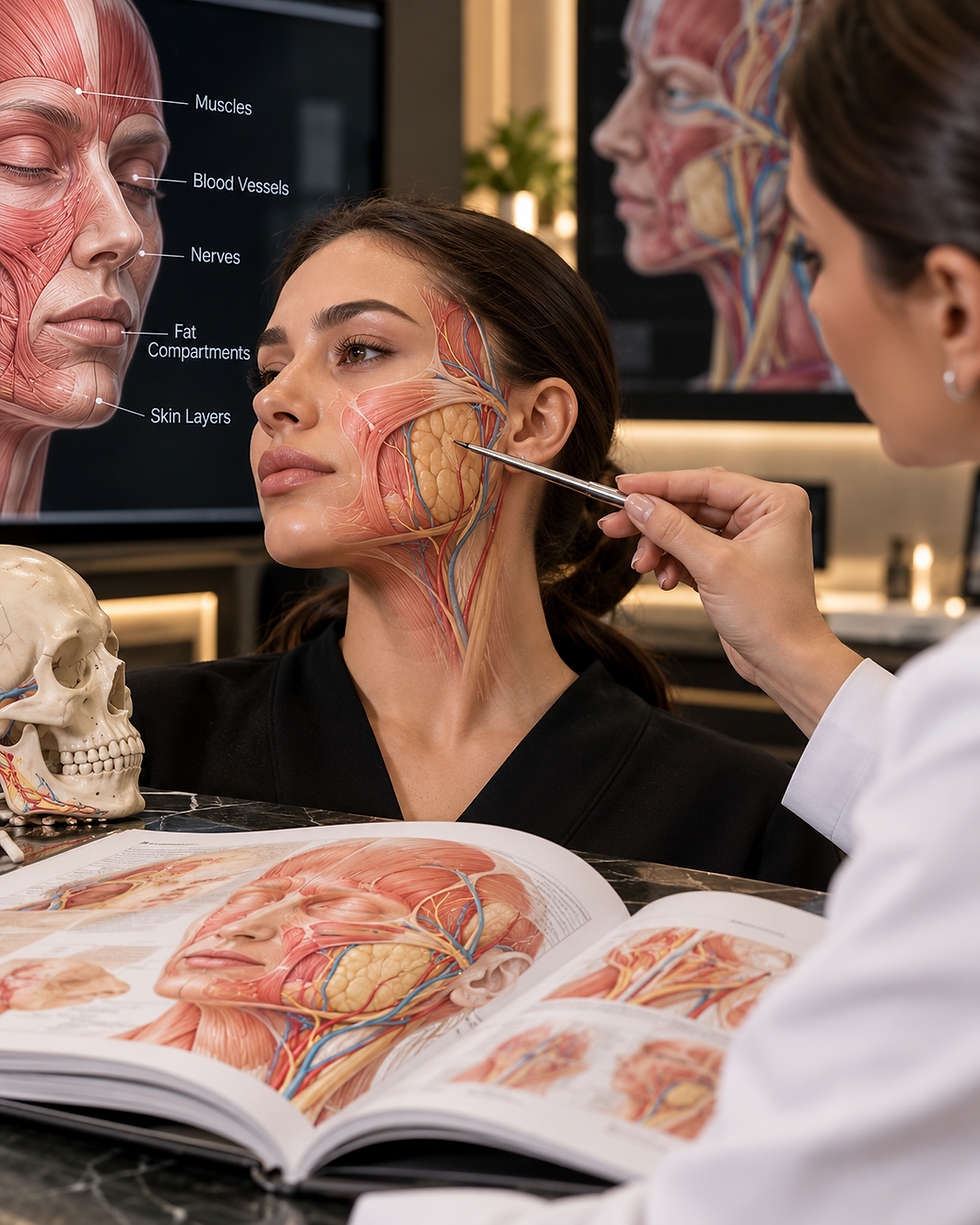
The face contains a complex network of muscles, blood vessels, nerves, fat compartments and supporting structures. Understanding how these structures interact is essential when planning aesthetic procedures.
Strong facial anatomy knowledge helps practitioners recognise anatomical variations, identify high-risk areas and make informed treatment decisions.
It also supports personalised treatment planning, as every patient's facial proportions and anatomical characteristics are different.
Key Areas of Facial Anatomy for Aesthetic Practitioners
A comprehensive understanding of facial anatomy includes several important structures:
Facial Muscles: Understanding muscle function and movement supports appropriate assessment for botulinum toxin treatments.
Blood Vessels: Knowledge of facial vascular anatomy is particularly important for recognising and reducing risks associated with injectable treatments.
Facial Nerves: Understanding nerve pathways helps practitioners identify sensitive anatomical regions.
Fat Compartments: Knowledge of facial fat distribution supports assessment of volume changes and ageing.
Skin and Supporting Structures: Understanding tissue layers helps practitioners select suitable treatment approaches.
These anatomical principles are fundamental to professional aesthetic education.
How Facial Anatomy Training Supports Patient Safety
Patient safety should remain central to every aesthetic procedure.
Appropriate facial anatomy training helps practitioners recognise contraindications, understand potential complications and identify situations requiring urgent intervention.
For injectable treatments, understanding vascular anatomy is especially important because complications such as vascular occlusion can lead to tissue damage and, in rare cases, visual impairment.
Anatomical knowledge must therefore be combined with supervised practical training, complication-management skills and appropriate clinical protocols.
Learning Facial Anatomy at BBAIM Academy
At BBAIM Academy, facial anatomy forms an important foundation for developing knowledge and practical skills in aesthetic medicine.
Through structured aesthetic training in London, practitioners can strengthen their understanding of facial assessment, treatment planning, anatomy and patient safety.
Whether beginning with foundation-level education or progressing towards advanced aesthetic qualifications, anatomical knowledge supports continued professional development.
Frequently Asked Questions
Why do aesthetic practitioners need facial anatomy training? It helps practitioners understand facial structures, assess treatment suitability and recognise potential risks during aesthetic procedures.
Is facial anatomy important for dermal fillers and botulinum toxin? Yes. Both treatments require detailed anatomical knowledge, although their mechanisms, techniques and associated risks differ.
Can beginners study facial anatomy? Yes. Facial anatomy is an important part of foundation-level aesthetic education and should be developed through appropriate theoretical and practical training.
Develop Your Aesthetic Knowledge with BBAIM Academy
Ready to strengthen your understanding of facial anatomy and advance your aesthetic career?
Explore professional aesthetic training at BBAIM Academy in Knightsbridge, London. Contact our team to learn more about available courses, practical training opportunities and your next steps in aesthetic education.
Visit: www.bbaim.co.uk