Professional Aesthetic Consultation: Step-by-Step Guide | BBAIM
How to Conduct a Professional Aesthetic Consultation: A Step-by-Step Guide for Practitioners
A successful aesthetic treatment begins long before the procedure itself. A professional aesthetic consultation is essential for understanding patient concerns, assessing suitability, managing expectations and supporting safe, personalised treatment decisions.
Whether you are beginning your career or developing your clinical skills, mastering the consultation process is a fundamental part of responsible aesthetic practice.
Why Is a Professional Aesthetic Consultation Important?
An aesthetic consultation is more than a conversation about treatment options. It provides an opportunity to understand the patient's goals, review relevant medical information, identify potential risks and establish realistic expectations.
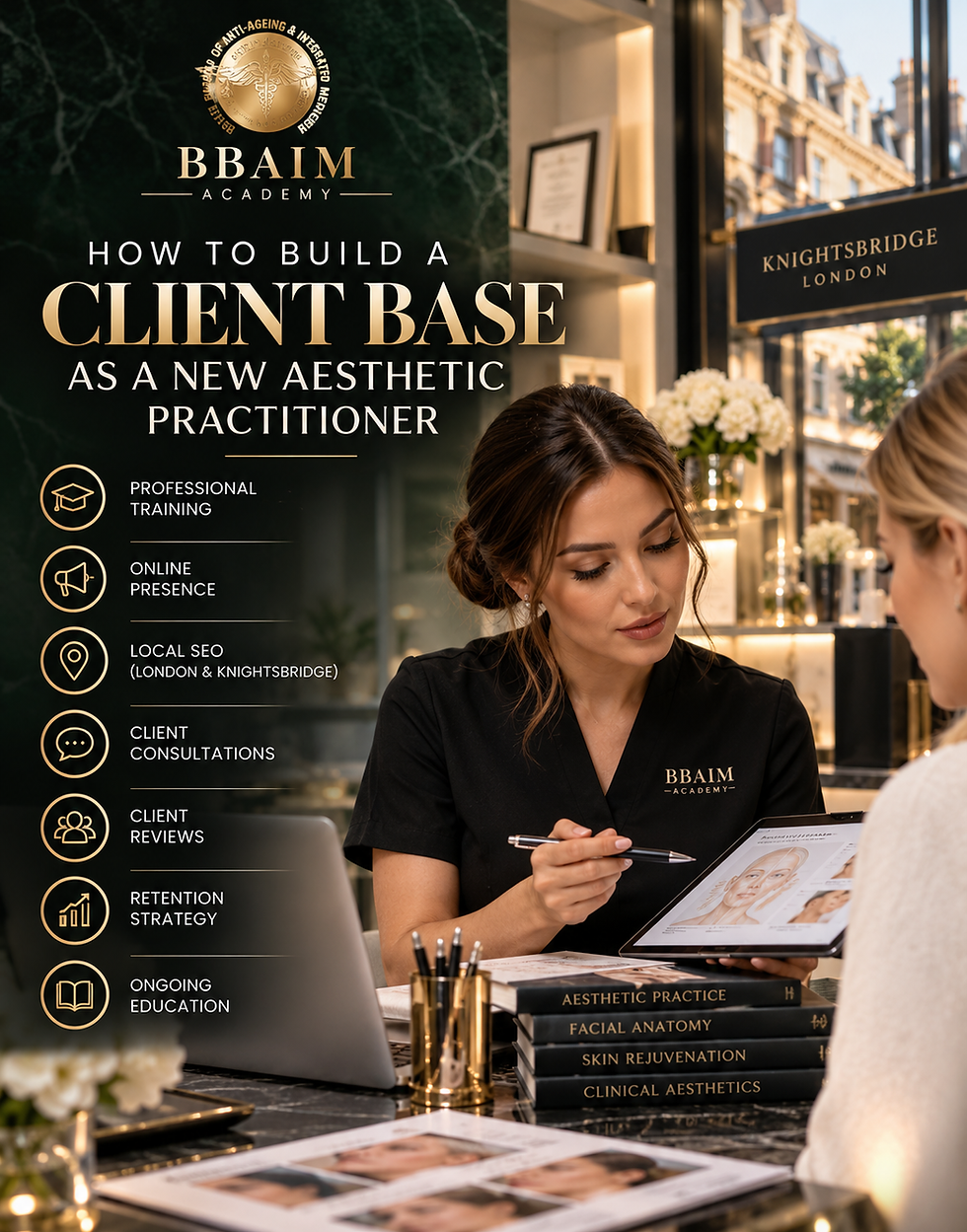
For practitioners working in competitive locations such as London and Knightsbridge, a thorough, patient-centred approach can also help build trust and support long-term professional relationships.
Step 1: Understand the Patient's Goals
Begin by asking open-ended questions about the patient's concerns, motivations and desired outcomes.
Listen carefully and avoid making assumptions. Understanding what the patient hopes to achieve helps determine whether a proposed treatment is appropriate and whether their expectations are realistic.
Step 2: Review Medical History and Contraindications
A comprehensive aesthetic patient assessment should include relevant medical conditions, medications, allergies, previous aesthetic procedures and potential contraindications.
Practitioners should also assess psychological wellbeing and recognise when treatment may not be appropriate.
Patient safety must always take priority over commercial considerations.
Step 3: Perform a Clinical Assessment
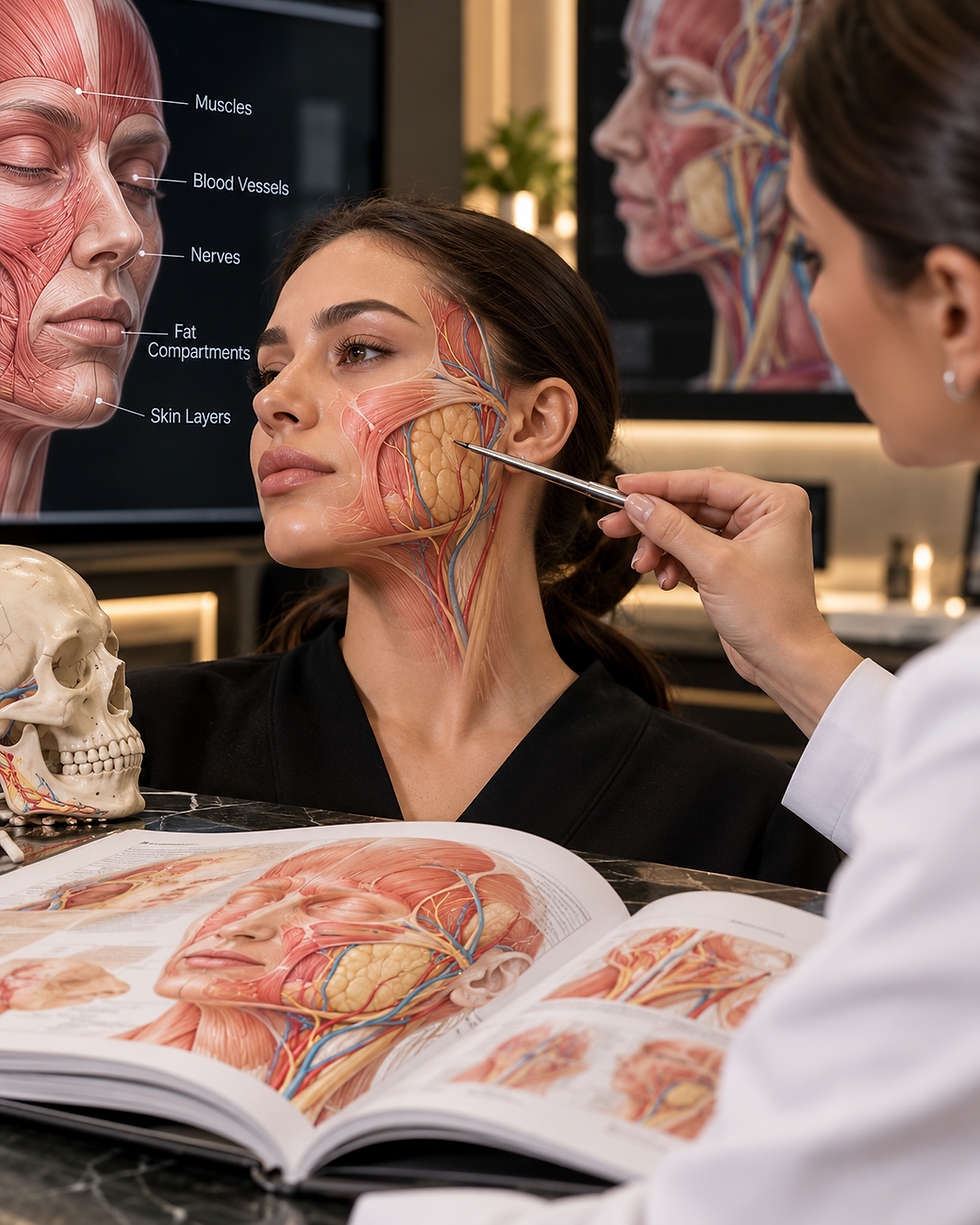
Depending on the proposed treatment, assess relevant facial anatomy, skin condition, symmetry and individual characteristics.
This clinical evaluation helps practitioners develop a personalised treatment plan rather than applying the same approach to every patient.
Step 4: Explain Treatment Options and Obtain Consent
Discuss suitable options, expected outcomes, limitations, potential complications, alternatives, costs and aftercare requirements.
Patients should have sufficient time to consider the information and ask questions. Informed consent must be voluntary, properly documented and obtained before treatment.
Consent is an ongoing process, not simply a signed form.
Step 5: Document and Plan Follow-Up Care
Maintain accurate, confidential consultation records, including assessment findings, consent discussions, agreed treatment plans and relevant clinical photographs where appropriate.
Explain aftercare instructions, warning signs and follow-up arrangements clearly.
Frequently Asked Questions
How long should an aesthetic consultation take?There is no universal duration. Allow enough time for a complete assessment, informed discussion and appropriate decision-making.
Can a practitioner refuse treatment?Yes. Treatment should not proceed when it is clinically inappropriate, unsafe or outside the practitioner's competence.
Why is consultation training important?It helps practitioners strengthen assessment, communication, consent and clinical decision-making skills.
Develop Your Aesthetic Consultation Skills with BBAIM Academy
A strong consultation process is the foundation of responsible aesthetic practice.
At BBAIM Academy in Knightsbridge, London, our aesthetic training programmes help practitioners develop essential knowledge in facial anatomy, patient assessment, safety and professional practice.
Contact BBAIM Academy today to explore our courses, enquire about upcoming training dates and take the next step in your aesthetic career.