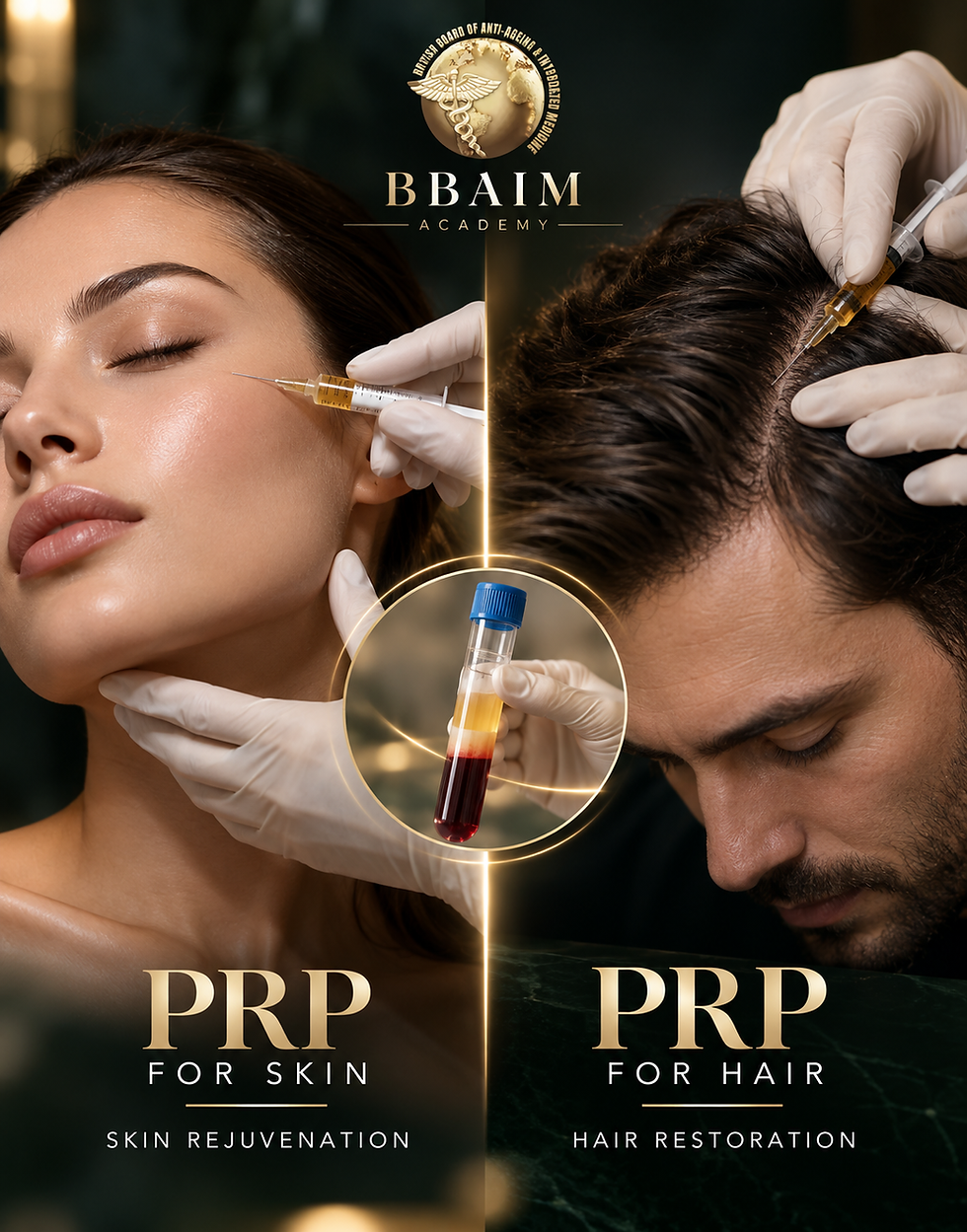
PRP for Skin vs PRP for Hair: What’s the Difference?
Platelet-Rich Plasma (PRP) has become an increasingly discussed treatment in regenerative aesthetics. Although PRP for skin and PRP for hair both use components derived from a patient's own blood, they serve different purposes and involve different treatment approaches.
For aesthetic practitioners and clinics in London, Knightsbridge and across the UK, understanding PRP for Skin vs PRP for Hair is important when selecting appropriate treatments and developing professional skills.
What Is PRP and How Does It Work?
PRP is prepared by collecting a small blood sample and processing it through centrifugation to concentrate platelets within the plasma.
Platelets contain growth factors involved in tissue repair and cellular signalling. In aesthetic practice, PRP is used in procedures intended to support skin quality or address certain forms of hair loss.
However, outcomes vary, and clinical evidence continues to develop, particularly regarding treatment protocols and long-term effectiveness.
PRP for Skin vs PRP for Hair: Key Differences
PRP for Skin Rejuvenation
PRP skin treatments focus on improving overall skin quality and appearance. Practitioners may use PRP to address concerns such as:
Uneven skin texture
Fine lines and early signs of ageing
Dull-looking skin
Certain acne scars
PRP may be delivered through injections or used alongside microneedling, depending on the treatment protocol. Evidence for specific skin-rejuvenation benefits remains mixed.
PRP for Hair Restoration
PRP hair treatments primarily target the scalp and hair follicles. They are commonly investigated for androgenetic alopecia, a form of pattern hair loss.
Treatment aims may include supporting hair density, improving hair thickness and reducing the appearance of thinning.
Research suggests potential benefits for selected patients, although results are variable and repeated sessions may be necessary.
Why Is Professional PRP Training Important?
Although both treatments use platelet-rich plasma, PRP skin rejuvenation and PRP hair restoration require different assessment and application techniques.
Practitioners must understand anatomy, patient selection, contraindications, infection prevention, complications management and realistic treatment expectations.
For professionals in London and Knightsbridge, structured aesthetic training can help develop the knowledge required to evaluate PRP applications responsibly.
At BBAIM Academy, regenerative aesthetic education includes PRP-related learning alongside other professional aesthetic training opportunities.
Frequently Asked Questions
Is PRP for skin the same as PRP for hair? Both use platelet-rich plasma, but their treatment areas, objectives and protocols differ.
How many PRP sessions are needed? Treatment schedules vary according to individual assessment, clinical protocols and the condition being addressed.
Is PRP suitable for everyone? No. Suitability depends on medical history, treatment objectives and a professional assessment.
Explore Regenerative Aesthetic Training at BBAIM Academy
Interested in expanding your knowledge of PRP and regenerative aesthetic treatments?
Contact BBAIM Academy to learn more about professional aesthetic training, available courses and upcoming opportunities in London and Knightsbridge.
Visit: www.bbaim.co.uk